
As per the news article published in Tamil regional news paper Dina Malar on 4.11.2019, proof of human existence is found in Shivalik Hills between Sindh valley to Brahmmaputra river (India),around 2 million years ago. In another news paper publication in Times of India in 2019, human existence in Bori, Maharashtra (India) found through human artefacts trusted to be 1.4 Million years old, excavated at site. This is against the western findings of Human race was first found only in Africa, who perhaps evolved from Chimpanzees and from western authors who authorize Indian history from BCE 6000 onwards.
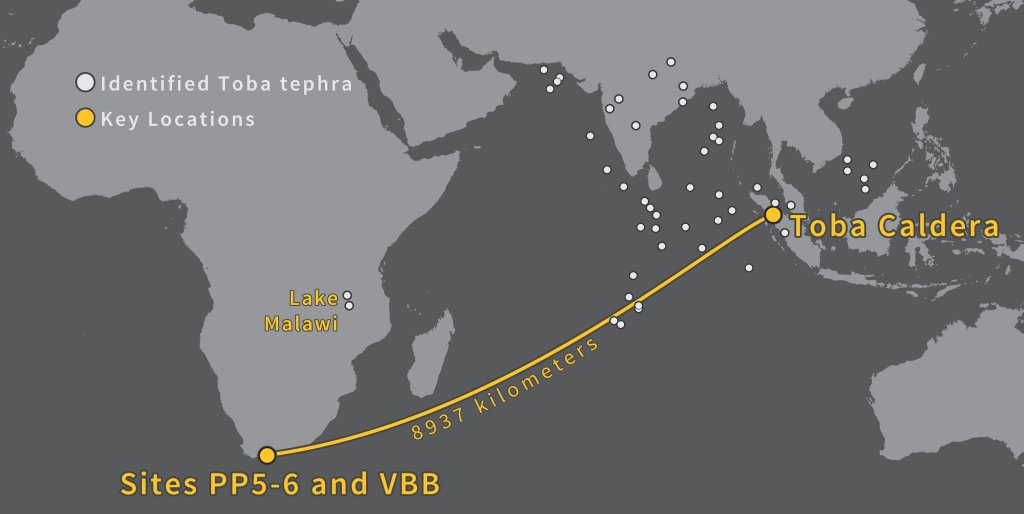
I had mentioned on the depth of astronomical knowledge evidently prevalent during the earlier period of Indian History around 16,000 BCE or earlier There is no evidence of such knowledge prevalent in any other part of universe as researched by Vedveer Arya, author of ‘The Chronology of India’, an Indian Historian, researcher. He has profound interests in Indian chronological history apart from the history of other regions of the universe. Though the corpus of our Vedic text says on the time period of Kalpa, Manvantharas, Yugas, Chathuryugas (combination of four Yugas together) etc., there is no concrete evidence of the same in our history prior to BCE 16,000. It was difficult to find out early settlement of Humans in Indian peninsula prior to BCE 30,000. Catastrophic eruption of Toba Volcano of Sumatra 75,000 years ago, completely wiped out Indian flora and fauna. The marine archaeological studies of Gulf of Cambay support the presence of Human settlement in Gujarat from 29,000 BCE. Early period of agriculture in India dates back to at least BCE 16,000.
The end of 28th Krita Yuga of seventh Manvanthara period was recognized on 22 Feb 6778 BCE, when all five planets Jupiter, Venus, Saturn, Sun, Moon were in close conjunction in Mesa Rasi (Aries) and Chaitra Sukla Pratipada. During 15,962 BCE Yuga calendar was recognised as 5 year period and Chaturyuga was 20 years. It was considered 1837 Yugas of 5 years period had elapsed from Adiyuga (15,962 BCE) to 6777 BCE. Indian astronomers recognized Jovian calendar of 12 year and 60 year cycle for Yuga and Chaturyuga respectively from 6778 BCE. A total of 9185 years had elapsed from a 15,692 BCE to 6777 BCE accounting for 6 completion of Manvantharas, 27 Chaturyugas and a Krita Yuga.
Significantly Saptarsi calendar (cycle of 2700 years) and a Yuga cycle of 1200 years were introduced as well during 6777 BCE. Aryabhata, India’s popular Astronomical exponent and a great mathematician calculated birth of Kaliyuga on 5th March of 3173 BCE. Based on his research and findings Aryabhata proposed an equal length of Yuga in a Chaturyuga of 43,20,000, but Indian traditional Siddhantas propounded a ratio cycle of 4:3:2:1 for the Yugas of Krita, Tretha, Dvabhara and Kali during the period 5000 BCE – 3200 BCE. Hence it was recognized from 4000 BCE Aryabhata’s recommendation of Chaturyuga and the duration period for the respective Yugas as per traditional Siddhantas. The 5 year Yuga period gradually evolved into 1200 years and 4,32,000 years in Indian calendrical Astronomy and 20 year Chaturyuga to 12,000 and to 43,20,000. The concept of large Yuga has led to the evolution of Kalpa, Manvantharas.
It is now evident for the depth of astronomical knowledge prevalent in India during 16,000 BCE and thereafter. Thanks to the rich corpus of Vedas and Upanishads.


Very detailed and well researched write up. Well done. Thanks.
LikeLike
Thanks a lot Sir..!!
LikeLike
Very good article. Interesting
LikeLike
Thanks Anna…!!!
LikeLike
The research that has gone into writing this article is commendable ! Keep it coming!
LikeLike
Thanks Aishwarya.
LikeLike